Danube Institute
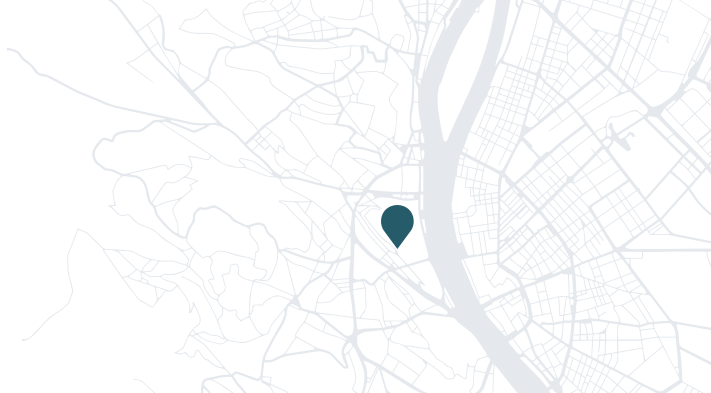
Office: Lónyay-Hatvany Villa - 1015 Budapest, Csónak St. 1.
Email: info@danubeinstitute.hu
Press: press@danubeinstitute.hu
Research
Hungary served as a base for Carlos the Jackal, a Venezuelan-born international terrorist and an affiliate of Palestinian liberation organisations for six years, between 1979 and 1985. He arrived uninvited, but was nevertheless received with initial hospitality; he did not commit any crime against his host country specifically, but was still ejected unceremoniously in September 1985. It is a classic story of Soviet Bloc brinksmanship in the world of radical organisations that burgeoned during the Cold War, all above the heads of strictly controlled Eastern European societies. The People’s Republic of Hungary was an especially welcoming destination due to the regime’s strict adherence to Moscow’s directives and reluctance to entertain any side deals, like turning terrorists over to Western authorities. Using newly unearthed documents from the archives of both the United Kingdom and Hungary, the authors aim to show how the story of the Jackal’s arrival, of his stay and especially of his eventual ejection informs us about the trajectory of Hungary throughout the Cold War.
Office: Lónyay-Hatvany Villa - 1015 Budapest, Csónak St. 1.
Email: info@danubeinstitute.hu
Press: press@danubeinstitute.hu