18/08/2020
15/09/2025
English
The Future of Power: Finding Order in a Time of Chaos - Day 1
!!The event has reached its maximum capacity, registration has been closed!!
Thank you for your interest. See you soon!
Danube Institute’s & The Heritage Foundation’s 5th Geopolitical Summit
15-16 September 2025
The post-war international order - founded on the pillars of liberal institutionalism, global markets, and multilateral consensus - is entering a decisive phase of disintegration. Whether through the strategic recalibrations of the United States under a second Trump administration, the assertive regionalism of emerging powers, or the internal fragmentation of the West itself, the world is now confronting a period of profound disorder. The question is no longer whether the old framework will hold, but rather: what comes next?
This year’s Geopolitical Summit convenes at a time when power is being redistributed - geographically, institutionally, and ideologically. It gathers conservative scholars, statesmen, and strategists to assess the collapse of consensus, the retreat of globalism, and the rise of sovereign realism. But amid this flux, the summit will also explore constructive paths forward: where national interest, strategic autonomy, and civilisational identity may offer the basis for renewed political stability.
Rather than mourn the passing of a liberal age, this conference takes seriously the risks and opportunities emerging in its wake. It asks: What forms of power will define the coming decades - military, economic, cultural, technological? How can nations preserve sovereignty in an era of contested interdependence? And what new norms or alliances might emerge from a world that is neither fully global nor simply multipolar, but structurally unsettled?
By engaging with key themes such as energy security, institutional legitimacy, demographic transformation, and Eurasian competition, the summit aims to articulate a sober and strategic vision for how order might be found - or forged - in a time of chaos.
Join us to find the answers to questions such as:
- What role can emerging regional powers play in a fractured international system?
- How can Europe respond to internal fragmentation and external competition?
- What strategies can secure sovereignty and strategic autonomy in an age of contested interdependence?
- Where might new alliances and civilisational identities provide stability in a structurally unsettled world?
Programme - Day One (full programme is available here)
9:00: Opening Remarks:
- John O’Sullivan, President, Danube Institute
- James Jay Carafano, Senior Counselor to the President and E. W. Richardson Fellow, The Heritage Foundation
9:20: Keynote Address - Kristóf Szalay-Bobrovniczky, Minister of Defence of Hungary
9:40: PANEL I. - The Collapsing Consensus: risks and opportunities
The post-Cold War consensus that once unified the West is rapidly fracturing. Strategic divergence between the United States and its European allies - on issues ranging from China and Iran to relations with India and Türkiye - reflects deeper ideological, economic, and geopolitical disunity. At the same time, the supposed cohesion of the “East” is equally illusory, with rival powers navigating a fragmented and transactional international landscape. This panel will examine the implications of the collapsing global consensus: the risks posed by incoherent multilateralism, the erosion of institutional norms, and the return of great-power competition; but also the opportunities emerging for mid-sized states, non-aligned actors, and alternative diplomatic coalitions in a more fluid, multipolar world.
Panel Keynote: George Yeo, Former Minister for Foreign Affairs of Singapore
- Ravi Kumar Sawhney, Centre Head & Senior Fellow, National Security and Strategic Studies & Internal Security Studies, Vivekananda International Foundation
- James Jay Carafano, Senior Counselor to the President, E. W. Richardson Fellow, The Heritage Foundation
- Isabella De Monte, Member of the Italian Chamber of Deputies
- Gladden J. Pappin, President, Hungarian Institute of International Affairs
Moderator: István Kiss, Executive Director, Danube Institute
10:50: Coffee break
11:20: PANEL II - Is International Institutionalism Dead?
The liberal world order was once anchored by international institutions - the UN, the World Bank, the ICC - which claimed universal legitimacy. Today, these structures appear increasingly impotent, irrelevant, or openly contested. This panel will examine the decline of global institutionalism in the face of rising state sovereignty, ideological fragmentation, and geopolitical multipolarity. Is international law still binding? Can multilateral bodies recover credibility - or are we entering a phase of ad hoc coordination and transactional diplomacy?
Panel Keynote: Curtis Yarvin, political philosopher, entrepreneur, computer scientist, CEO, Urban Tiger
- Zoltán Kovács, State Secretary for International Communication and Relations, Cabinet Office of the Prime Minister of Hungary
- Eugene Kontorovich, Senior Research Fellow, The Heritage Foundation, Professor, Antonin Scalia Law School of George Mason University
- Ernst Roets, Executive Director, Lex Libertas
- Stefano Gennarini, President for Legal Studies, Center for Family and Human Rights (C-Fam)
Moderator: Gergely Dobozi, Deputy Director, Danube Institute
12:30: Lunch break
13:30: PANEL III. - Migration & Citizenship: Can Nations Choose Their Members?
Mass migration is not merely an economic issue - it is now central to debates about sovereignty, identity, and social cohesion. This panel will confront hard questions: Can the West sustain birthright citizenship in an age of demographic and cultural pressure? Or does the pressure to weaken citizenship and to adapt to migrants and migration come mainly from the West? Should naturalization and asylum policies be fundamentally rethought to align with national interests and civilizational continuity? What models can reconcile economic needs with cultural self-preservation?
Panel Keynote: Fabrice Leggeri, Former Frontex Director, Member of the European Parliament
- Viktor Marsai, Executive Director, Migration Research Institute, Mathias Corvinus Collegium (MCC)
- Ammon Blair, Senior Fellow, Texas Public Policy Foundation
- Raphaël Audouard, Director, Patriots for Europe Foundation
- Guy Dampier, Senior Researcher on Nationhood, Prosperity Institute
Moderator: Kristóf György Veres, International Director, Danube Institute
14:40: Keynote Address - to be announced
15:00: Coffee break
15:20: PANEL IV. - Can Europe Defend Itself? NATO, Sovereignty, and the Search for Strategic Autonomy
The post-war alliance system - NATO above all - was built on shared ideological commitments and institutional trust. But as nations reassert sovereign interests and diverge on values, the meaning of ‘alliance’ is shifting. This panel will explore the future of security cooperation in a world where loyalty to blocs is conditional, transactional, and interest-driven. Is a flexible order of “sovereign partnerships” emerging? And what are the risks of fragmentation in the West’s strategic architecture?
Panel Keynote: Robert Wilkie, Chairman of the Center for American Security at the America First Policy Institute, former United States Secretary of Veterans Affairs
- Justin Logan, Director of Defense and Foreign Policy Studies, Cato Institute
- Aliza Bin-Noun, Former Political Director, Ministry of Foreign Affairs of Israel, former Ambassador to Hungary and France, Distinguished Fellow of the Ludovika Public Diplomacy Hub
- Gergely Németh, Chief Executive Officer, Defence Innovation Research Institute of Hungary (VIKI)
- Sumantra Maitra, Director of Research and Outreach, American Ideas Institute
Moderator: Carlos Roa, Visiting Fellow, Danube Institute
16:30: Closing Remarks - Robert Palladino, Chargé d’Affaires, a.i., Embassy of the United States of America to Hungary
16:45: Program ends
Details
Date&Time: September 15, Monday, 2025, 9:00am
On-site registration: 8:20am
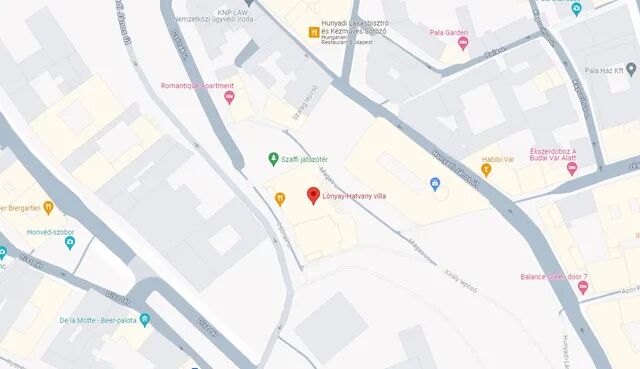
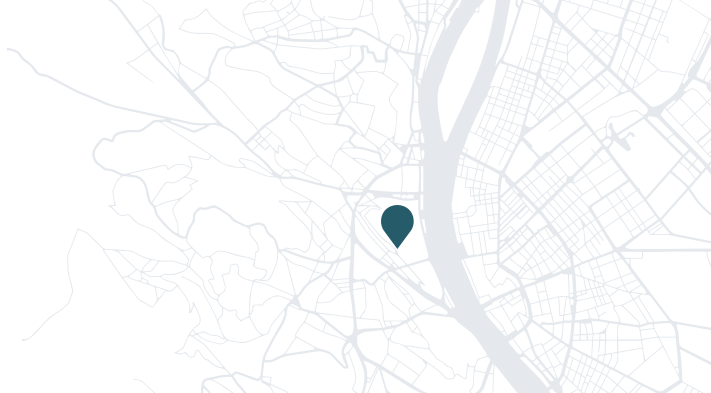
Venue: Színház, Lónyay-Hatvany Villa, 1 Csónak Street, 1015 Budapest
(Entrance: Aranybástya Restaurant)
Language: English
Participation is free; however, due to limited seating, pre-registration is required.
Venue:
Lónyay-Hatvany Villa - Theater
1015 Budapest, Csónak utca 1.Entrance: Aranybástya Restaurant