2022. Március 2.
2026.01.21.
English
A Pivotal Year: Israel, the Middle East, the US, and Europe Come 2026
*The event has reached its maximum capacity, registration has been closed*
Thank you for your interest. See you soon!
Following the signing of the Trump-led Gaza ceasefire deal, the strikes on Iran’s nuclear facilities and ballistic missiles project, and the effective neuralization of the bulk of Hezbollah’s capabilities - which prompted the Lebanese government’s decision to disarm the group - the Middle-East is bracing for a profound restructuring of its security architecture. At stakes is the potential expansion of the Abraham Accords with the full normalization of diplomatic relations between long-time rivals Israel and Saudi Arabia, which may extend to the wider Muslim world, including Pakistan and Indonesia.
While these developments take place in the Middle East and primarily under American leadership, Europe would do well to study them closely, engage proactively, and position itself to benefit from the potential peace dividends.
Yet instead, many Western European governments – backed by international institutions, and influential globalist NGOs – have continued to paint Israel as the aggressor, that needs to be openly castigated, isolated internationally – and even sanctioned for its conduct during the war. Yet, within the EU27, Hungary stands out as Israel’s most consistent and outspoken ally in its fight against radical Islamism, providing a diplomatic umbrella for Israel in EU institutions, withdrawing from the ICC, and ensuring the security of its Jewish community at a time when much of Western Europe has been engulfed by a spike of anti-Semitic waves, mostly as a result of massive influx of irregular migration from the Islamic world.
This conference, jointly convened by the Danube Institute, Ludovika University of Public Service, and the Israel-based David Institute for Security Policy (affiliate of IDSF), will explore how the Middle East war has precipitated a regional realignment; Europe’s potential role in this shifting landscape, including opportunities and partnerships tied to the IMEC project. Finally, while acknowledging Hungary’s track record as Israel’s most ardent supporter in Europe, it will also examine the possibility of building a coalition of Central-European nations united in opposition to mass irregular migration as well as in support of Israel’s fight against radical Islam.
The conference will commence on 20 January at 5 P.M. (gate open at 4:30 P.M.) at Ludovika University of Public Service with a fireside chat featuring Sir Liam Fox, former UK Secretary of State for International Trade, preceded by brief opening remarks. The evening will conclude with a short reception.
Kindly note that registration for each conference day is separate, as the events will take place at different venues. Online registration for the first day's evening event can be found here.
Programme (clike here to download the Conference Booklet)
21 January 2026: Conference at the Danube Institute
Master of Ceremonies: Melissa O'Sullivan, Deputy Director, Danube Institute
10:00 – Opening Remarks
10:20 - Panel I. - Hungary and Central Europe’s Unique Role as Israel’s natural Allies and their Potential Leadership in the EU
- Radek Vondráček - Chairman of the Foreign Affairs Committee; Vice-Chair, Constitutional and Legal Committee, Chamber of Deputies of the Parliament of the Czech Republic
- Igor Šlosar – President, Centre for Public Policy and Economic Analysis (CEA)
- Marek Magierowski - former Ambassador of the Republic of Poland to Israel
Moderator: Kristóf György Veres - International Director, Danube Institute
11:45 – Lunch Break
13:00 - Panel II. - Bias of International Institutions
- Eugene Kontorovich - Senior Research Fellow, The Heritage Foundation, Professor, Antonin Scalia Law School of George Mason University
- Vasif Huseynov - Head of Western Studies Department, Center for Analysis of International Relations (AIR Center)
- Gergely Dobozi - Deputy Director, Danube Institute
Moderator: Or Yissachar - Executive Director, David Institute for Security Policy
14:20 - Coffee break
14:40 - Keynote presentation: János Bóka, Minister for European Union Affairs of Hungary
15:00 - Panel III. - Abraham Accords and Hungary (and Central Europe)
- Panel Keynote: Maya Kadosh - Ambassador of Israel to Hungary
- Ronen Itsik - Senior Researcher, Head of Military-Society Desk, David Institute for Security Policy
- Levente Benkő - former Hungarian Ambassador to Israel
- Adam LeBor - Visiting Fellow, Danube Institute
Moderator: Liliana Śmiech, Director General for International Affair, Ludovika University of Public Service
16:20 - Closing remarks
16:30 - Program ends
Details:
Date & time: Wednesday, 21 January, 2026, 10:00 A.M.
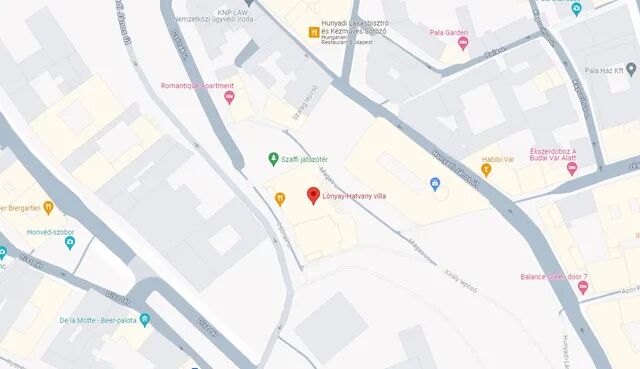
Venue: Lónyay-Hatvany Villa, 1 Csónak Street, 1015 Budapest (Entrance: Aranybástya Restaurant)
Gate opens at 09:30 A.M.
Language: English