2014. Október 23.
2025.12.09.
English
Danube Institute’s Inaugural Turkic-Western Geopolitical Dialogue
Natural Economic Allies: Forging Turkic-Western Economic Cooperation
The Turkic-Western Geopolitical Dialogue, held under the framework of the Turkic-Western Engagement Initiative of the Danube Institute, seeks to advance dialogue on the evolving role of the Turkic world in global politics and economics. The 2025 conference focuses on the theme “Natural Economic Allies: Forging Turkic-Western Economic Cooperation”, reflecting the growing importance of the Turkic states as partners for Europe and the United States in a rapidly reconfiguring global order. Situated at the crossroads of Europe and Asia, the Turkic countries – spanning from Türkiye to Central Asia – are emerging as pivotal actors in energy security, trade connectivity, and critical mineral supply chains. Their institutional cooperation under the Organisation of Turkic States (OTS) highlights their ambition to act as a united geoeconomic force, strengthening their role as natural allies of the West.
The conference will explore four major dimensions of this engagement:
- the geopolitical shifts shaping the Turkic world;
- the strategic role of Turkic countries in enhancing European energy security;
- the prospects for a structured EU-OTS partnership framework;
- and the growing importance of the US-Turkic Silk Road nexus in strengthening transatlantic ties with the region.
As this annual forum develops, it will contribute to shaping a deeper understanding of Eurasia’s emerging economic architecture and the shared opportunities for stability, growth, and strategic resilience across the Turkic–Western axis.
Programme (click here for downloadable version)
The Organizer reserves the right to change the program.
Master of Ceremonies: Ibrahim Mammadov, Head of the Turkic-Western Engagement Initiative, Danube Institute
9:00: Opening Remarks:
- István Kiss - Executive Director, Danube Institute
- Tristan Azbej - State Secretary, Ministry of the Foreign Affairs and Trade of Hungary
9:20: Keynote Presentation: H.E. Mr. Abzal Saparbekuly - Ambassador of the Republic of Kazakhstan to Hungary
09:40: PANEL I - Paving the Future of the US-Turkic Silk Road Cooperation
The United States is increasingly looking to the Silk Road region as a strategic arena for advancing connectivity, energy diversification, and resilient supply chains. With the Turkic world emerging as a pivotal bridge between East and West, deeper cooperation offers new avenues to strengthen transatlantic engagement in Eurasia. This panel will examine how US-Turkic Silk Road cooperation can adapt to the realities of a multipolar order, creating opportunities for mutually beneficial partnerships with the Turkic states.
Panel Keynote: Richard Hoagland – Chairman, Caspian Policy Center (CPC)
- Daniyar Kurbanov - Head of Department, Historical and Cultural Heritage Studies and Humanitarian Research, Institute for Central Asia (IICA), former Ambassador of Uzbekistan to China
- Zhanibek Arynov - Assistant Professor, Graduate School of Public Policy, Nazarbayev University
- Damjan Krnjević Mišković - Director for Policy Research, Analysis and Publications, Institute for Development and Diplomacy (IDD), Professor of Practice, ADA University
- Michael Doran - Senior Fellow and Director, Center for Peace and Security in the Middle East
Moderator: Ibrahim Mammadov – Head of the Turkic-Western Engagement Initiative, Danube Institute
10:50: Coffee break
11:20: Keynote Presentation:
- H.E. Mrs. Gülşen Karanis Ekşioğlu - Ambassador of the Republic of Türkiye to Hungary
- H.E. Mr. Oybek Shakhavdinov - Ambassador of the Republic of Uzbekistan to Hungary
11:40: PANEL II. - Reinforcing the Role of Turkic Countries in European Energy Security
The Turkic world plays an increasingly critical role in Europe’s quest for secure, diversified, and sustainable energy supplies. With Azerbaijan and Türkiye acting as key transit hubs through the Southern Gas Corridor and Trans-Caspian routes, and Turkmenistan and Kazakhstan providing vast reserves of hydrocarbons and critical minerals, the region strengthens Europe’s energy resilience. This panel will assess how closer energy cooperation with Turkic states can reduce dependency on unstable routes and support Europe’s long-term energy security strategy. This panel will search for further opportunities for the energy security of Europe and the role of the Turkic Countries and Hungary in the process.
Panel Keynote: Csaba Gondola - State Secretary for Circular Economy and Climate Policy, Ministry of Energy of Hungary
- Bauyrzhan Auken - Lead Expert, Asian Studies Department, Kazakhstan Institute for Strategic Studies under the President of the Republic of Kazakhstan (KazISS)
- Osman Zeki Gökçe - Assistant Professor of Political Science and International Relations at Boğaziçi University, Researcher at SETA
- Rusif Huseynov - Director and Co-founder, Topchubashov Center
- Urs Unkauf - Plenipotentiary Extraordinary for Global External Affairs, the Federal Association for Economic Development and Foreign Trade (BWA Global Economic Network)
Moderator: James Jay Carafano - Senior Counselor to the President and E.W. Richardson Fellow, The Heritage Foundation
12:50: Lunch break
14:00: PANEL III. - Diversifying Critical Mineral Supply Chains
With Donald Trump’s return to the U.S. presidency, reducing China’s dominance over critical mineral supply chains has become a renewed strategic priority for Washington. The Energy Act of 2020, passed during Trump’s first term, formally emphasised the diversification of critical mineral sources vital for technologies like electric vehicles and renewable energy systems. As global demand for these resources rises, the Silk Road region—particularly Central Asia—is emerging as a key supplier. Countries such as Kazakhstan, Uzbekistan, Kyrgyzstan, and Turkmenistan are increasingly attracting international attention for their vast reserves of copper, lithium, rare earth elements, and other strategic minerals. This panel will explore how the US and European critical mineral cooperation with the Central Asian region can be facilitated and what role Hungary can play in the process.
Panel Keynote: Eric Rudenshiold - Research Director and Senior Fellow, Caspian Policy Center
- Han Ilhan - Advisor to Chairman, Uzbekistan Technological Metals Complex (TMK)
- Gianclaudio Torlizzi - Advisor to the Italian Minister of Defense, Founder of T-Commodity
- Vladimir Paddack - Fellow, Nightingale Intelligence; Senior Analyst, AKE International
Moderator: Péter Kövecsi-Oláh - historian, turkologist, Ludovika Center for Turkic Studies
15:10: Coffee break
15:40: Keynote Presentation: Balázs Hendrich – Ambassador, Executive Director, Representation Office of the Organization of Turkic States (OTS) in Hungary
16:00: PANEL IV. - Establishing the EU-OTS Partnership Framework
As the Organisation of Turkic States (OTS) gains momentum, the European Union faces a timely opportunity to engage with a rising regional bloc at the heart of Eurasia. Cooperation on trade, connectivity, energy, and digitalisation could strengthen resilience on both sides while fostering greater stability across Europe and Central Asia. This panel will explore the prospects for a structured EU-OTS partnership framework, highlighting Hungary’s unique role as a bridge and advocate for closer cooperation. This panel will explore the possibility of the formation of a cooperation framework between the EU and OTS and the possibility of a summit in Budapest.
- Shakhboz Akhmedov - Head of the Center for Sustainable Development, Institute for Advanced International Studies (IAIS)
- Yaşar Sarı - Director, Haydar Aliyev Center for Eurasian Studies; Professor of International Politics, Department of Political Science and International Relations, Ibn Haldun University
- Kamalbek Karymshakov - Vice Rector, Professor of Economics Kyrgyz-Turkish Manas University
- László Vasa - Chief Advisor, Senior Research Fellow, Hungarian Institute of International Affairs; Head, Ludovika Center for Turkic Studies
Moderator: Mariann Őry - Deputy Editor-in-Chief, Eurasia Magazin
17:10: Closing remarks
17:25: Program ends
Details:
Date & time: Tuesday, 9 December, 2025, 9:00
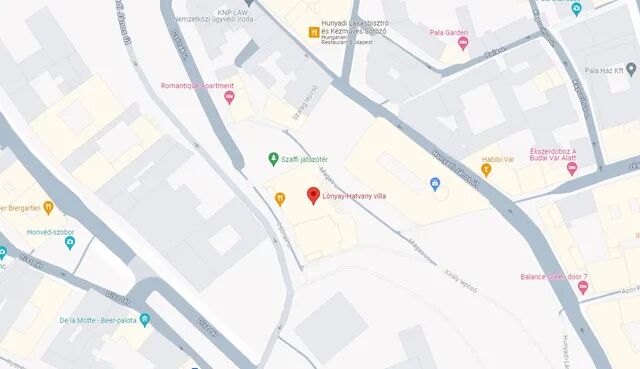
Venue: Lónyay-Hatvany Villa, 1 Csónak Street, 1015 Budapest (Entrance: Aranybástya Restaurant)
Gate opens at 8:30
Language: English
Participation is free; however, due to limited seating, pre-registration is required by clicking the button below.