2019. December 13.
2025.09.16.
English
The Future of Power: Finding Order in a Time of Chaos - Day 2
!!The event has reached its maximum capacity, registration has been closed!!
Thank you for your interest. See you soon!
Danube Institute’s & The Heritage Foundation’s 5th Geopolitical Summit
15-16 September 2025
The post-war international order - founded on the pillars of liberal institutionalism, global markets, and multilateral consensus - is entering a decisive phase of disintegration. Whether through the strategic recalibrations of the United States under a second Trump administration, the assertive regionalism of emerging powers, or the internal fragmentation of the West itself, the world is now confronting a period of profound disorder. The question is no longer whether the old framework will hold, but rather: what comes next?
This year’s Geopolitical Summit convenes at a time when power is being redistributed - geographically, institutionally, and ideologically. It gathers conservative scholars, statesmen, and strategists to assess the collapse of consensus, the retreat of globalism, and the rise of sovereign realism. But amid this flux, the summit will also explore constructive paths forward: where national interest, strategic autonomy, and civilisational identity may offer the basis for renewed political stability.
Rather than mourn the passing of a liberal age, this conference takes seriously the risks and opportunities emerging in its wake. It asks: What forms of power will define the coming decades - military, economic, cultural, technological? How can nations preserve sovereignty in an era of contested interdependence? And what new norms or alliances might emerge from a world that is neither fully global nor simply multipolar, but structurally unsettled?
By engaging with key themes such as energy security, institutional legitimacy, demographic transformation, and Eurasian competition, the summit aims to articulate a sober and strategic vision for how order might be found - or forged - in a time of chaos.
Join us to find the answers to questions such as:
- What role can emerging regional powers play in a fractured international system?
- How can Europe respond to internal fragmentation and external competition?
- What strategies can secure sovereignty and strategic autonomy in an age of contested interdependence?
- Where might new alliances and civilisational identities provide stability in a structurally unsettled world?
Programme - Day Two (full programme is available here)
9:00: Keynote Address – Tony Abbott, Former Prime Minister of Australia, Senior Visiting Fellow, Danube Institute
9:20: PANEL V. - What Comes After Globalization? Trade, Technology, and the New Economic Order
The age of free trade orthodoxy has ended. This panel will assess how national resilience, re-industrialization, and technological sovereignty are reshaping the global economic landscape. How will trade policies evolve in a world of friend-shoring, supply chain nationalism, and strategic decoupling? Can economic nationalism coexist with selective global cooperation - or are we entering a long phase of bloc-based economic competition?
Panel Keynote: Vaclav Klaus, Former Prime Minister and President of the Czech Republic
- Javlon Vakhabov, Director of the International Institute for Central Asia (IICA), Deputy Advisor to the President of Uzbekistan on Foreign Policy
- Darren Spinck, Managing Director, Janus Forum
- Urs Unkauf, Federal Managing Director, German Federal Association for Economic Development and Foreign Trade (BWA Global Economic Network).
Moderator: George Bogden, Senior Fellow, Yorktown Institute
10:30: Coffee break
11:00: PANEL VI. - Who Will Power the Post-Liberal World? Energy, Security, and Strategic Leverage
In the post-liberal age, energy is no longer a neutral commodity - it is a tool of statecraft, a source of leverage, and a trigger for realignment. As traditional energy markets fragment and the green transition collides with geopolitical realities, nations must reconsider how energy security intersects with sovereignty, economic resilience, and international influence. This panel will explore how energy dominance - whether in fossil fuels, nuclear, or critical green technologies - is shaping the risks and opportunities of the emerging world order. Who will wield power in the next phase of the global energy contest, and who will be left exposed?
Panel Keynote: David Frost, Member of UK House of Lords, Visiting Fellow, Danube Institute
- W. Gyude Moore, former Minister of Public Works of Liberia
- Dóra Gedai, Energy Policy Advisor to the Deputy State Secretary for European Union Affairs and International Relations of the Ministry of Energ
- Vasif Huseynov, Head of Department, Center of Analysis of International Relations (AIR Center)
- Diana Furchtgott-Roth, Director of the Center for Energy, Climate, and Environment, The Heritage Foundation
Moderator: Calum T.M. Nicholson, Director of Research, Danube Institute
12:10: Lunch break
13:10: PANEL VII. - The Geopolitics of the Silk Road region: From Crossroads to Pivot Point
Once the heartland of ancient trade routes, the Silk Road region has long occupied a liminal space in global affairs, strategically situated yet often geopolitically peripheral. At its core, the region encompasses the countries of the South Caucasus and Central Asia, and more broadly involves major actors such as Türkiye, Iran, and parts of Russia. With their growing geostrategic importance, local countries have established various platforms to jointly shape the region’s future, most notably, the Organisation of Turkic States (OTS). Several trilateral formats include Türkiye - Azerbaijan - Uzbekistan, Türkiye - Georgia - Azerbaijan, and Azerbaijan-Kazakhstan-Uzbekistan. The latter is particularly significant, as all three are keystone states within the Silk Road region and central to its ongoing transformation. This panel explores key questions: How will the Silk Road region, as an emerging centre of gravity, navigate the evolving global order? How are pivotal states like Azerbaijan, Kazakhstan, and Uzbekistan managing competing pressures? And what does this regional resurgence mean for Europe, for connectivity strategies such as Hungary’s, and a West grappling with the limitations of liberal internationalism?
Panel Keynote: Matthew Bryza, Former US Ambassador to Azerbaijan, Managing Director, Straife
- Damjan Krnjević Mišković, Professor of Practice at ADA University, Director for Policy Research, Analysis and Publications, Institute for Development and Diplomacy (IDD)
- Hasan Ali Karasar, Rector, Cappadocia University
- Iskander Akylbayev, CEO & Founder, Xander Group
Moderator: Ibrahim Mammadov, Visiting Fellow, Danube Institute
14:20: Keynote Address – to be announced
14:40: Coffee break
15:00: PANEL VIII. - The emerging Turkic economic space: Mining the Future, Forging New Dependencies
The Turkic countries of the Silk Road region are asserting themselves not only as geopolitical actors but increasingly as a geoeconomic force, particularly in the global race for critical minerals, rare earth elements, and energy resources. Once overlooked, the region now attracts growing attention from China, the European Union, and the United States. Of particular significance is the growing consumer market across the Turkic world and the critical mineral reserves in Central Asia. Situated between the increasingly unreliable routes through Russia and Iran, Azerbaijan and Türkiye play pivotal roles in the development of the Trans-Caspian corridor, the only secure and viable route connecting the West to Central Asia. Hungary, a keystone state of the Danubian region, recognised this potential ahead of many of its Western partners. Through its "Eastern Opening" policy, Hungary has become a trusted partner to the Turkic world, serving as an observer state in the Organization of Turkic States (OTS). This panel explores the economic transformation of the Turkic world in the context of shifting global supply chains, climate transitions, and technological demands. How is the region’s resource wealth reshaping its development trajectory? How can Europe engage with Central Asia on economic terms that promote resilience rather than subservience? Finally, what role can Hungary play as a bridge between Western markets and the Turkic economic space?
Panel Keynote: Balázs Hendrich, Ambassador, Executive Director, Organization of Turkic States (OTS) Office in Budapest
- Ian Proud, Former Economic Counsellor and Crisis Committee Chair at the British Embassy in Moscow, Non-Resident Fellow, Quincy Institute
- Yulduzkhon Imomova, Chief Research Fellow, Institute for Advanced International Studies
- László Vasa, Chief Advisor, Senior Research Fellow, Hungarian Institute of Foreign Affairs
Moderator: Zsófia Bódi-Rácz, Head of Communications, Danube Institute
16:10: Closing Remarks
16:30: Program ends
Details
Date&Time: September 16, Tuesday, 2025, 9:00am
On-site registration: 8:20am
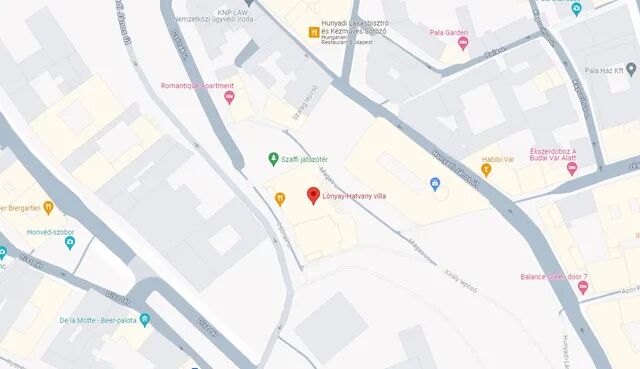
Venue: Színház, Lónyay-Hatvany Villa, 1 Csónak Street, 1015 Budapest
(Entrance: Aranybástya Restaurant)
Language: English
Participation is free; however, due to limited seating, pre-registration is required.